
The Rosette Nebula
March 2026
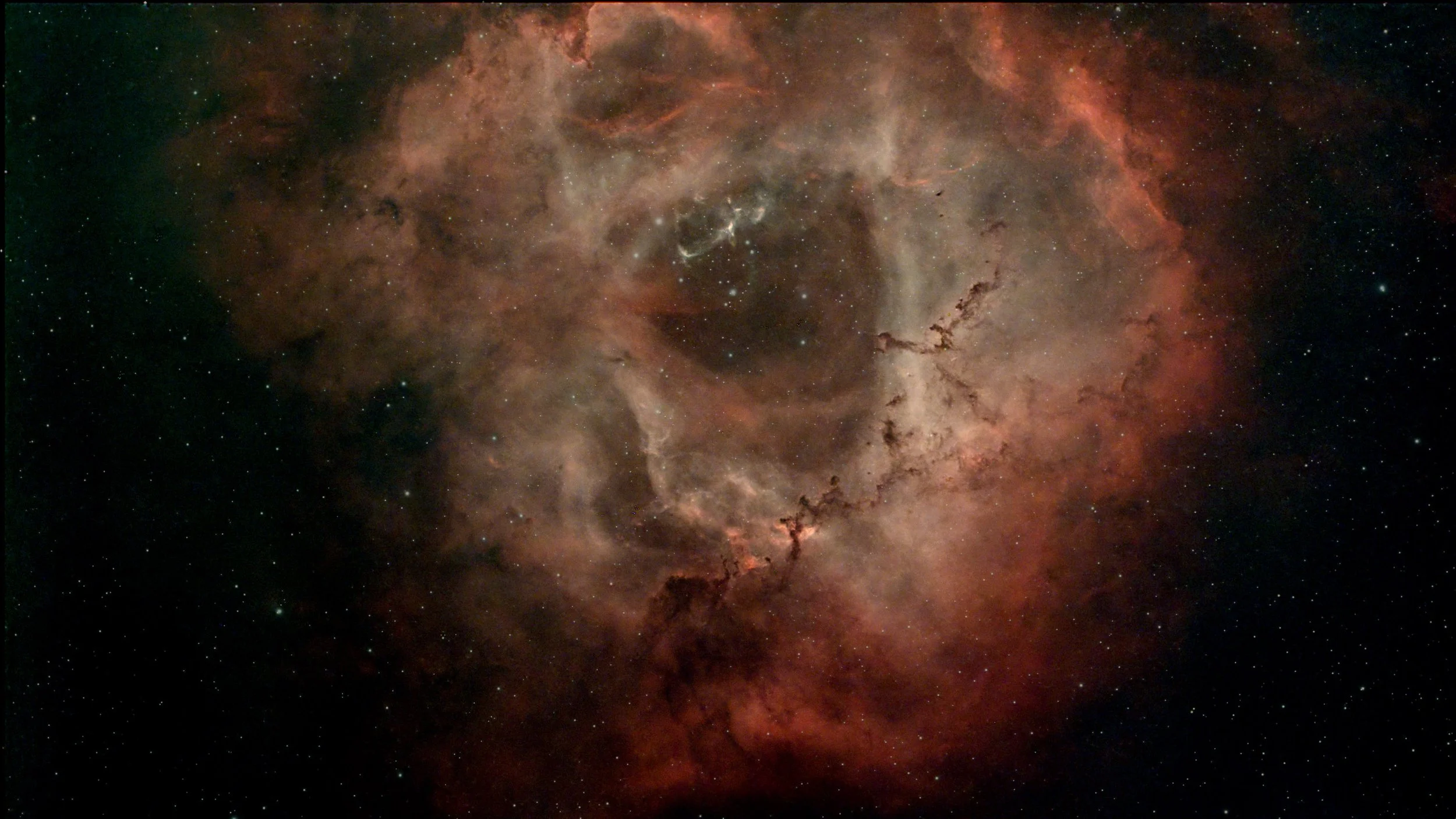
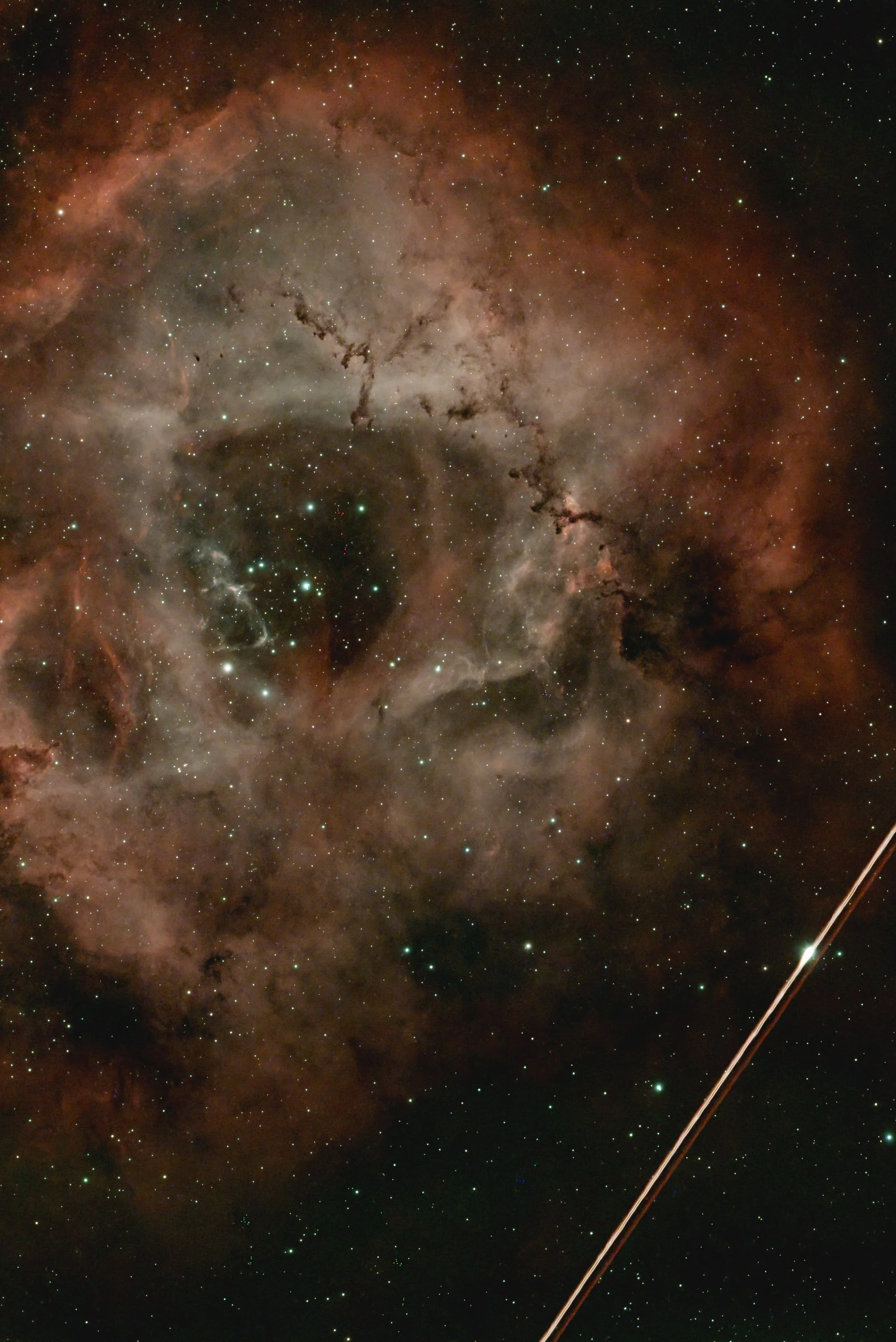
The Rosette Nebula, spread across the faint constellation Monoceros, is a vast star-forming region roughly 5,000 light-years away, first noted by early observers in the 1600s and later cataloged as astronomers began mapping the deep sky in detail. At its center lies a young open cluster whose intense radiation has carved out the hollow core, pushing surrounding hydrogen gas outward into the layered, petal-like structure seen here. This image represents about three and a half hours of integration, and for me it marks a turning point as my first time successfully pushing to consistent five-minute exposures, which came with real challenges in tracking, guiding, and patience. There is a strong sense of pride in that progression, seeing both the technical improvement and the detail it reveals in the nebula’s structure. In one version, a passing plane cuts cleanly across the frame, an unexpected but perfectly placed streak that frames the Rosette in a uniquely human way, a brief moment of motion intersecting with something that has been evolving for millions of years.
Galactic Views
Winter 2025-2026
Andromeda - M31
Whirlpool - M51
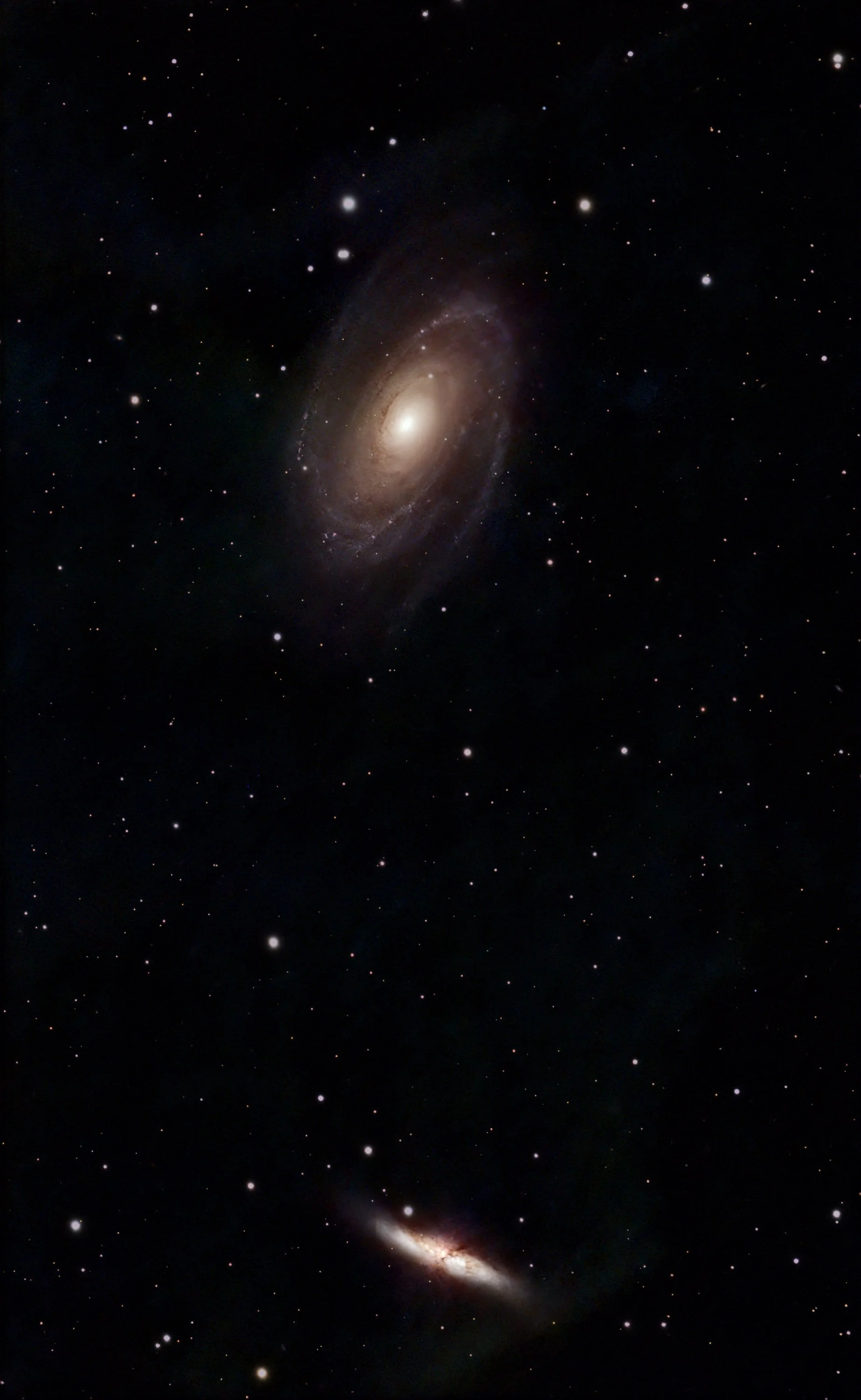
Bodes and Cigar
Galaxies
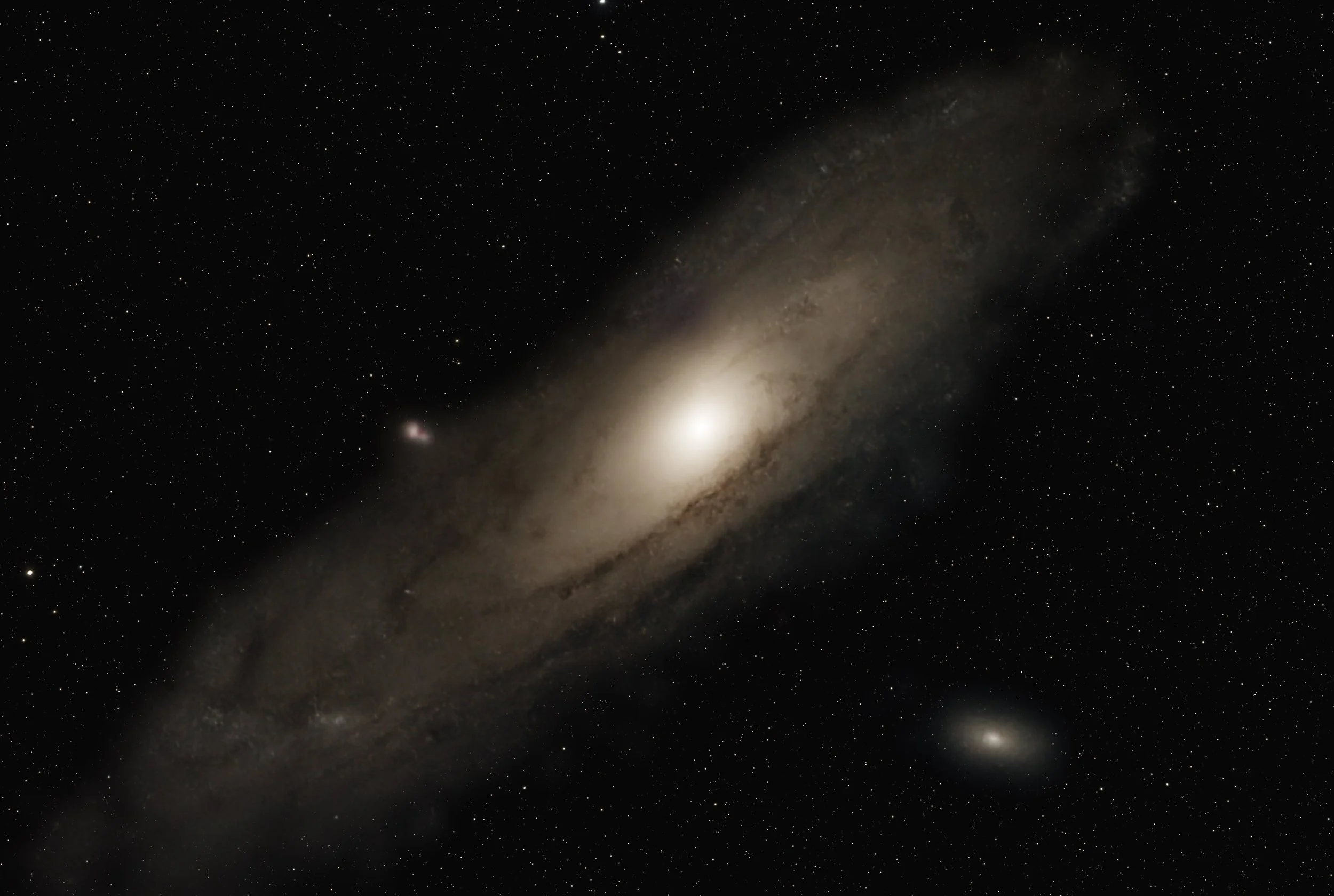
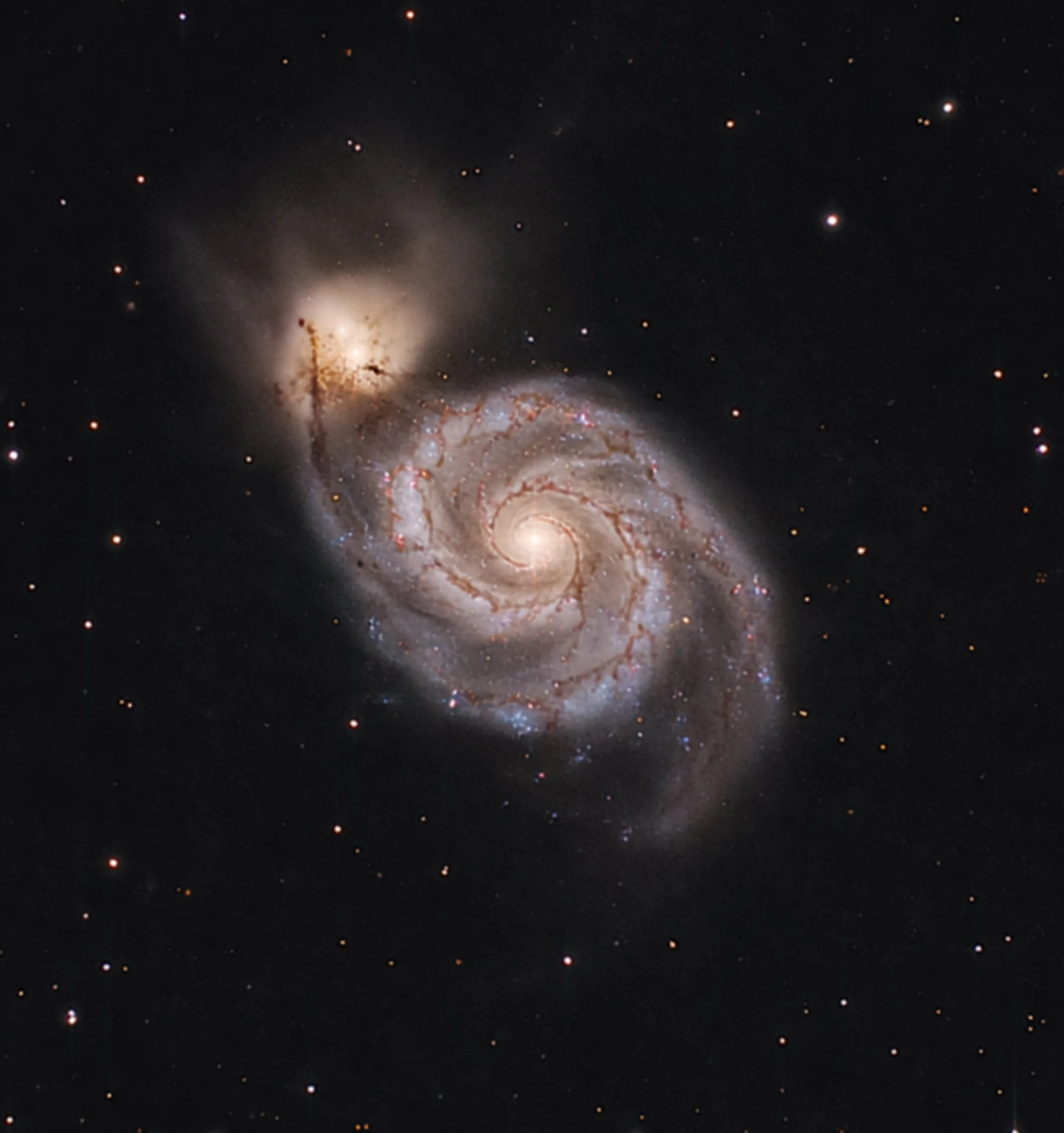
This collection brings together a few of the most iconic galaxies in the night sky, each captured as they quietly evolve over millions of years. From the elegant spiral structure of the Whirlpool Galaxy to the vast, elongated form of Andromeda, these systems are not just distant objects but entire galaxies filled with billions of stars, dust, and dark matter. Many of these were first cataloged by Charles Messier in the 18th century as faint, comet-like smudges, long before we understood their true scale and nature. Photographing them requires patience and precision, pulling subtle detail out of incredibly faint light across long exposures. What stands out to me in this set is the contrast between structure and scale. Each galaxy feels distinct and almost personal in shape, yet all of them exist at distances so vast that the light captured here has been traveling for millions of years just to reach the sensor.
LUNA
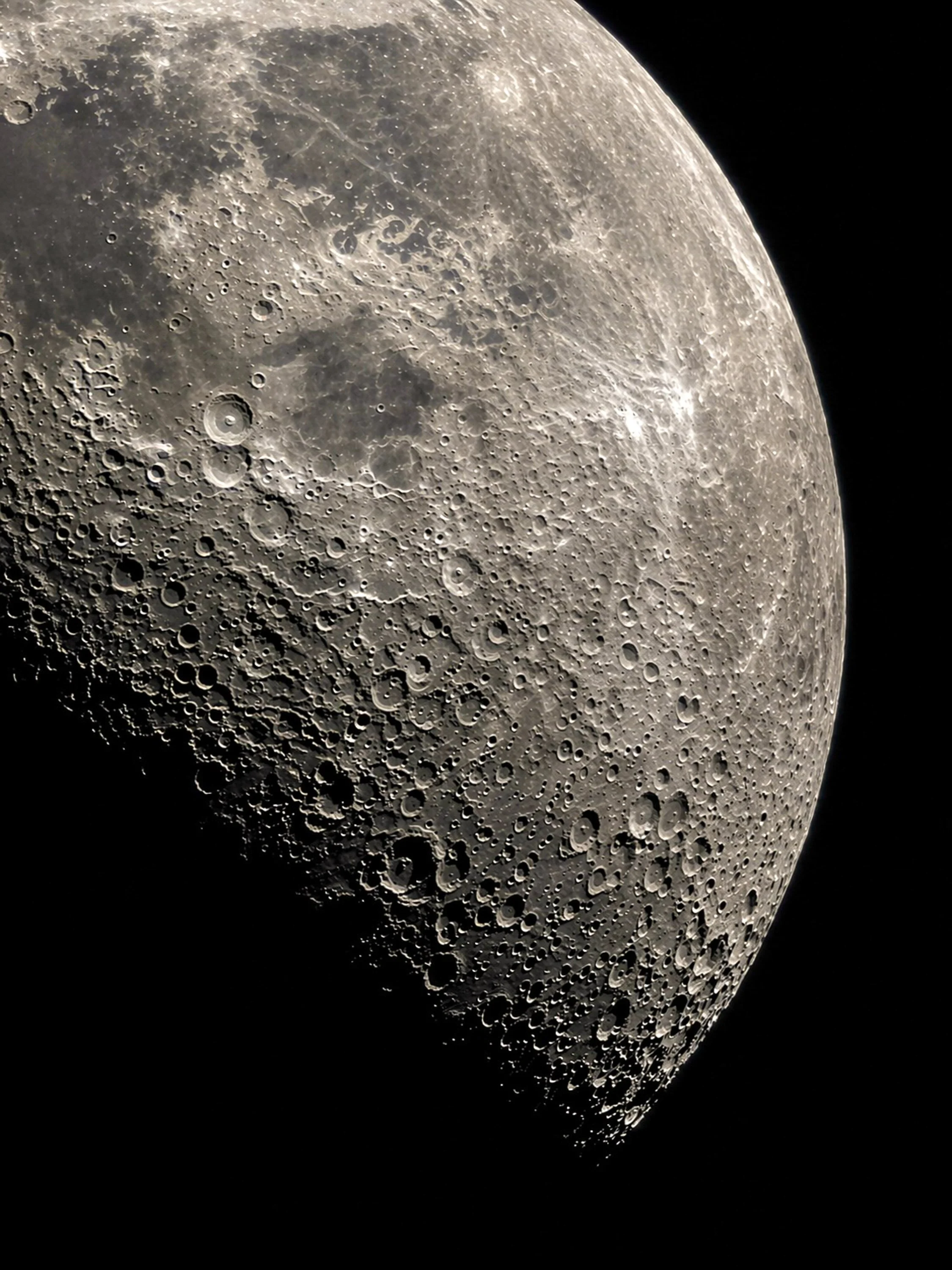
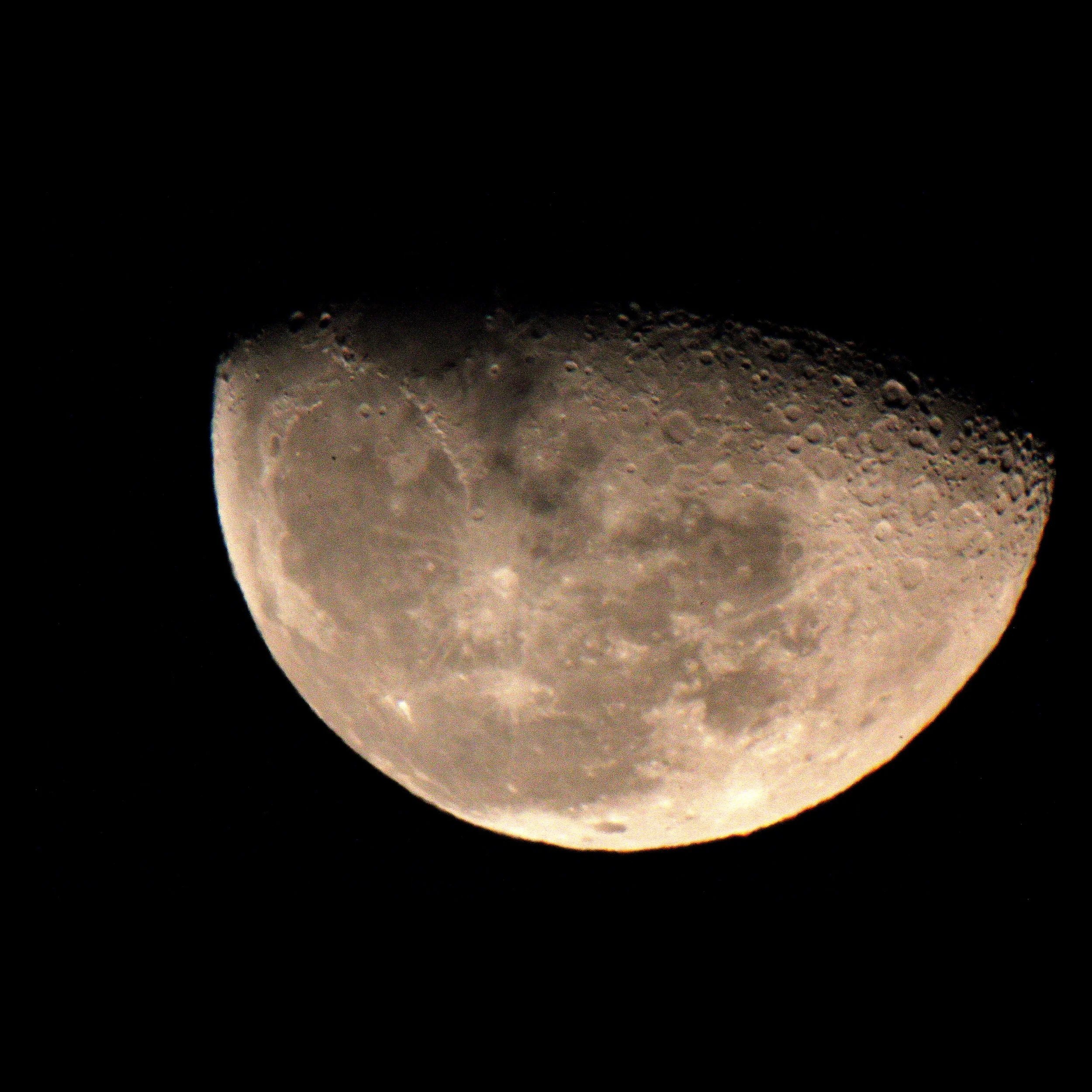
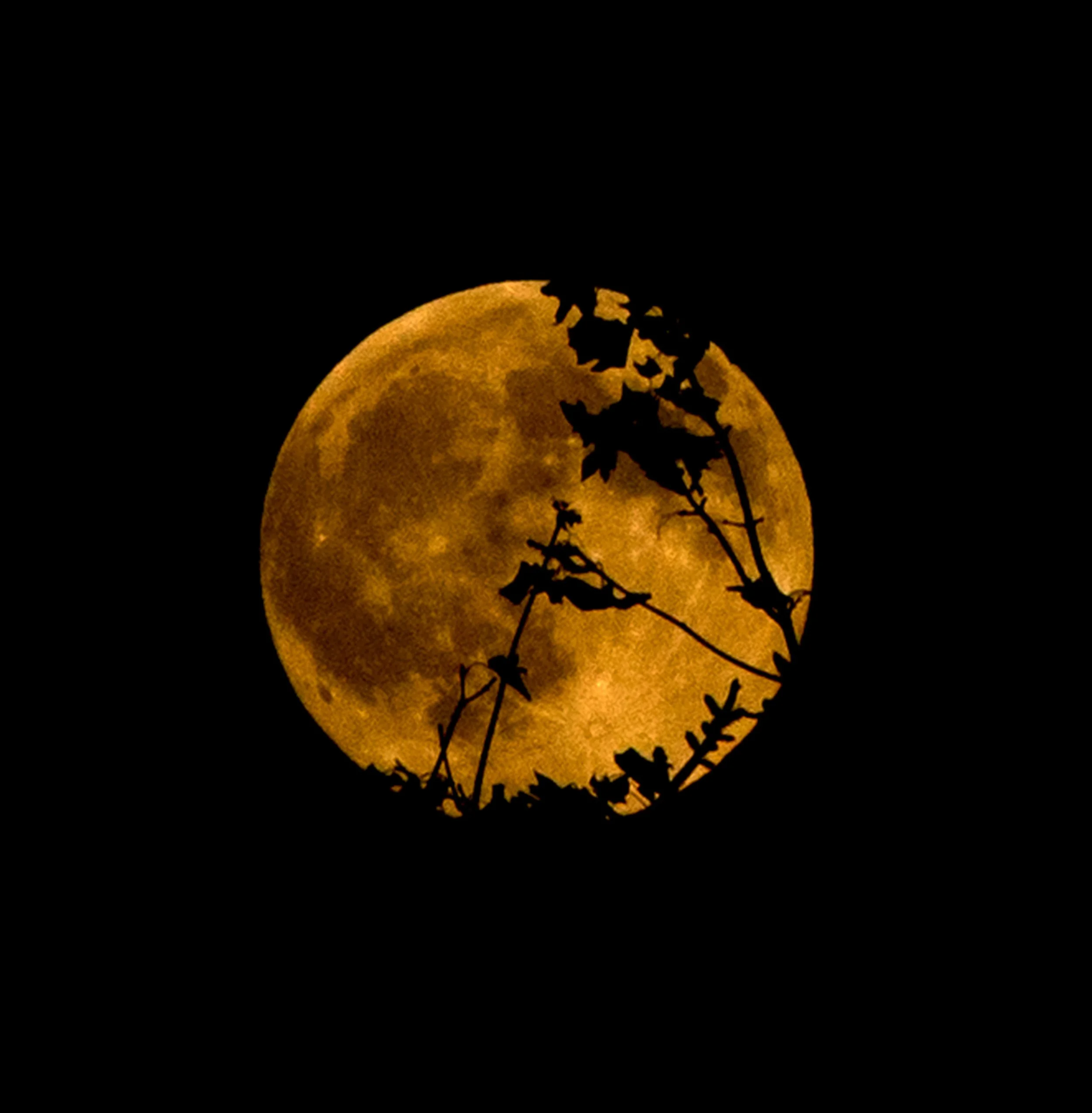
The Moon has always been the most accessible target in the night sky, but these images pushed me to see it differently. From the razor-sharp detail along the terminator where craters and ridges stand out in stark relief, to the softer, warmer tones captured as it rises through the atmosphere, each shot represents a different approach to something that is easy to overlook. Dialing in focus, exposure, and timing to pull out this level of detail took more iteration than expected, especially in balancing sharpness with the constantly shifting conditions. What makes it even more compelling right now is that it is no longer just a distant object we study. With Artemis missions bringing us back toward the Moon, including the recent push with Artemis II, it feels a bit closer again, not just scientifically, but personally. These images sit somewhere between that familiarity and that renewed sense of exploration.